
- All
- Product Name
- Product Keyword
- Product Model
- Product Summary
- Product Description
- Multi Field Search
Views: 0 Author: Site Editor Publish Time: 2026-08-18 Origin: Site


The discrepancy between manufacturer-stated vacuum runtimes and actual real-world performance often leads to incomplete cleaning cycles and premature hardware replacement. Buyers frequently misinterpret battery specifications (mAh and Voltage) as direct guarantees of cleaning time, failing to account for the exponential drain of high-suction modes, motorized attachments, and floor resistance. To make an informed purchasing decision, buyers must evaluate vacuum battery capacity runtime through the lens of their specific environmental demands, understanding the technical trade-offs between device weight, suction power, and long-term battery degradation.
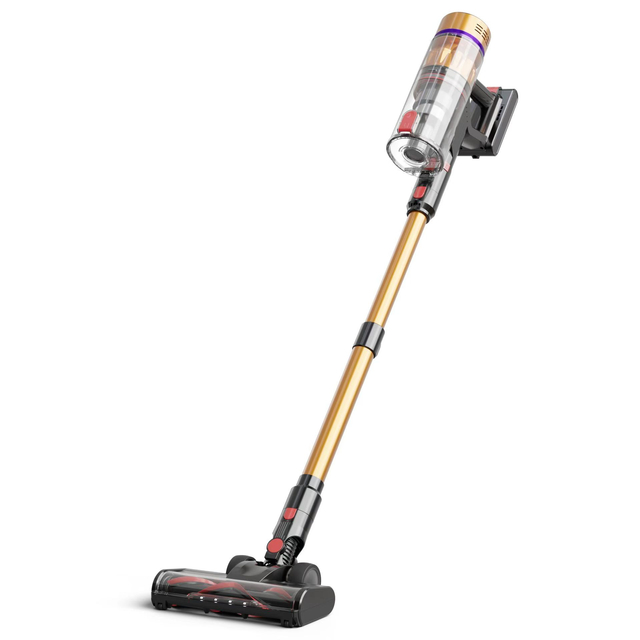
Capacity vs. Load: A high milliampere-hour (mAh) rating does not guarantee long runtime if the vacuum utilizes high-draw motors or is consistently run on "Max" suction settings.
Form Factor Trade-offs: Ultra-light cordless vacuums sacrifice battery capacity for ergonomics, resulting in shorter runtimes and a faster accumulation of charge cycles compared to heavier, high-capacity models.
Lifecycle Degradation: Most lithium-ion vacuum batteries are rated for 300 to 500 charge cycles before experiencing a significant capacity drop (e.g., a 90-minute runtime degrading to 30 minutes), typically translating to a 2 to 5-year lifespan.
Environmental Impact: Operating or storing vacuums in extreme temperatures (especially below 0°C) temporarily reduces capacity, while charging cold batteries can cause permanent lithium plating, destroying the battery's lifespan.
Table of Contents
When evaluating cordless cleaning tools, the raw numbers printed on the specification sheet rarely tell the whole story. Manufacturers test devices in highly controlled environments, often running the machine on the lowest suction setting without any motorized attachments engaged. Real-world cleaning introduces friction, gravity, and varied debris types, all of which force the motor to draw more current from the power source.
To accurately compare units, you must understand the relationship between milliampere-hours (mAh), Voltage (V), and Watt-hours (Wh). Think of mAh as the size of the fuel tank. It measures how much electrical charge the battery holds. Many modern vacuums utilize 18650 or 21700 cylindrical lithium-ion cells. The physical size and chemical density of these cells dictate how much active material is packed inside. Voltage acts as the engine power, determining how much electrical pressure pushes that charge to the motor. Comparing a 20V vacuum to a 28V vacuum using only mAh creates a false equivalency.
The most accurate baseline for comparing total energy capacity across different brands is Watt-hours. You can determine the true energy payload of any vacuum battery by following a simple calculation process:
Locate the voltage rating on the vacuum's battery pack (e.g., 21.6V).
Identify the capacity rating in amp-hours (Ah). If listed in mAh, divide by 1000 (e.g., 4000mAh becomes 4.0Ah).
Multiply the voltage by the amp-hours to find the Watt-hours (e.g., 21.6V x 4.0Ah = 86.4Wh).
Use this final Wh number to compare different models, regardless of their operating voltage.
Suction settings drastically alter the discharge rate. The relationship between motor speed and power consumption is non-linear. Vacuum motor controllers utilize pulse-width modulation (PWM) to regulate speed. On low settings, the controller sends shorter electrical pulses, conserving energy. On maximum settings, the duty cycle remains almost constantly open, flooding the brushless DC motor with current. Doubling the suction power often requires quadrupling the electrical draw.
This explains why a vacuum rated for 60 minutes on "Eco" mode may only yield 10 to 15 minutes on "Boost" or "Max" mode. High-draw settings pull current faster than the battery's internal chemistry can efficiently supply. This rapid discharge generates internal heat and accelerates voltage sag. For daily dust maintenance on hard floors, low suction suffices. Deep cleaning embedded pet hair from thick carpets demands maximum power, draining the battery exponentially faster.
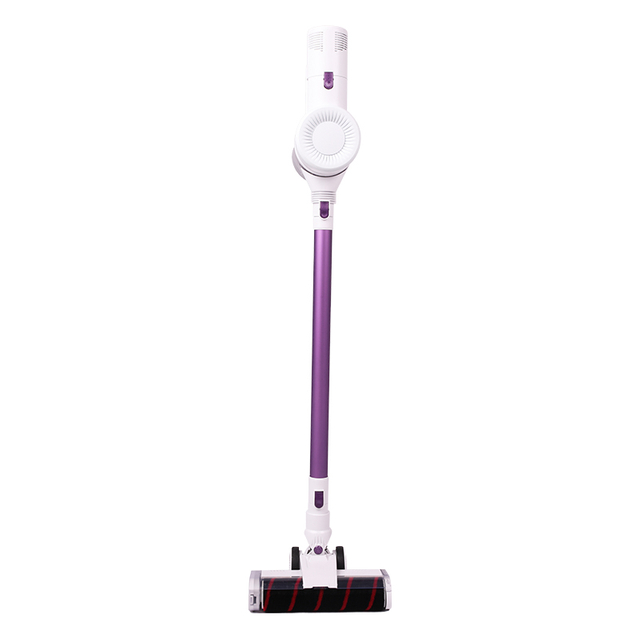
Motorized attachments introduce another significant electrical load. Active brush rolls feature their own secondary motors housed directly inside the floor head. When you transition from a smooth hardwood floor to a medium-to-high pile carpet, the brush bristles encounter severe physical resistance. The secondary motor must pull additional amperage to maintain its rotational speed against this friction.
Soft fluffy rollers designed for hard floors require minimal torque to spin freely. Conversely, stiff nylon bristles digging into carpet fibers require high torque, pulling substantially more amps. Smart vacuums mitigate this rapid drain by utilizing dirt detection and surface resistance sensors. These systems optimize vacuum battery capacity runtime by dynamically altering power draw based on real-time feedback. The machine automatically increases suction and brush roll torque when it detects carpet or heavy debris, and immediately throttles down when returning to smooth floors. This ensures maximum power is only deployed when absolutely necessary.
Surface Resistance and Estimated Power Draw Impact
Floor Surface Type | Brush Roll Resistance | Motor Torque Requirement | Impact on Total Runtime |
|---|---|---|---|
Sealed Hardwood / Tile | Very Low | Minimal | Baseline (Maximum advertised runtime) |
Low-Pile Commercial Carpet | Moderate | Medium | 15% to 25% reduction from baseline |
Medium-Pile Residential Carpet | High | High | 30% to 45% reduction from baseline |
High-Pile / Shag Rugs | Severe | Maximum | 50%+ reduction from baseline |
Automated cleaners operate under entirely different constraints than manual stick models. Standard capacities for robot vacuums typically range from 2600mAh for entry-level units to 5200mAh or higher for premium models. These capacities theoretically translate to runtimes of 60 to over 250 minutes. However, suction is only one part of the power equation.
You must assess how onboard technology consumes baseline battery capacity before the vacuum even begins pulling dirt. During the initial mapping phase, the robot relies heavily on its LiDAR array and Simultaneous Localization and Mapping (SLAM) algorithms. Spinning lasers, optical camera navigation, cliff sensors, and continuous Wi-Fi connectivity constantly draw power. A robot navigating a complex floorplan with numerous obstacles spends significant energy processing spatial data and physically rotating its drive wheels to maneuver around furniture.
Determine the necessary battery size based on your exact square footage to avoid mid-clean interruptions. A 2600mAh battery generally handles up to 800 square feet efficiently. Homes exceeding 1,500 square feet require a 5200mAh pack to complete the mapping and cleaning cycle in a single uninterrupted session.

Stick vacuums dominate the market due to their versatility, but they face strict ergonomic limitations. Handheld form factors typically house 2000mAh to 3000mAh battery packs. Manufacturers intentionally restrict capacity to keep the device slim and maneuverable.
Larger batteries inherently contain more lithium-ion cells, adding significant weight to the handle. Placing a massive 5000mAh battery near the handle shifts the center of gravity away from the floor head. While this increases total energy reserves, it creates a pendulum effect that places severe strain on the user's wrist, increasing fatigue during overhead cleaning or prolonged floor sessions. Ultra-light models utilize smaller packs, resulting in shorter runtimes. This forces the user to charge the device more frequently, which accelerates chemical wear on the cells.
To bypass single-charge limitations without adding excessive weight to the main unit, evaluate the necessity of removable or swappable battery systems. Homes exceeding 1,500 square feet benefit immensely from modular designs. You can keep a secondary pack fully charged on the dock, instantly swapping it out when the primary battery depletes. This effectively doubles your runtime without compromising ergonomics.
Compact handheld units prioritize extreme portability over sustained runtime. Advertised limits frequently boast 10 to 40 minutes of operation. The practical reality of continuous, high-draw use usually falls between 15 to 20 minutes.
Frame your evaluation around high-draw, short-burst usage. These devices excel at localized debris removal, such as vacuuming floor mats, extracting crumbs from car seats, or clearing small spills in the kitchen. They utilize smaller, high-discharge cells designed to dump power quickly for maximum suction over a brief window. Relying on a compact car vacuum for sustained cleaning sessions will inevitably lead to frustration and rapid battery depletion.
Vacuum Category Capacity and Runtime Comparison
Category | Typical Capacity (mAh) | Standard Voltage (V) | Practical Runtime (Mixed Use) | Primary Application |
|---|---|---|---|---|
Robot Vacuums | 2600 - 5200+ | 14.4 - 14.8 | 60 - 250 mins | Automated daily maintenance |
Cordless Stick Vacuums | 2000 - 3000 | 18.0 - 25.2 | 20 - 45 mins | Primary whole-home cleaning |
Handheld / Car Vacuums | 1500 - 2500 | 10.8 - 12.0 | 10 - 20 mins | Localized burst cleaning |
Lithium-ion chemistry dictates a finite lifespan regardless of how carefully you maintain the machine. Most vacuum batteries hit a degradation threshold between 300 and 500 full charge cycles. A cycle represents a complete 100% discharge and recharge, or multiple partial discharges that equal 100%. The concept of Depth of Discharge (DoD) plays a major role in lithium-ion longevity. Draining a battery from 100% down to 0% places immense chemical stress on the internal anode and cathode. Shallower discharges, such as using 50% of the capacity and then recharging, can actually extend the total cycle life.
Your specific cleaning routine dictates how quickly you reach this cycle limit. Daily vacuuming of a large home might consume a full cycle every 24 hours, pushing the battery to its degradation point in under two years. Weekly cleaning routines extend that timeline, often resulting in a real-world lifespan of 3 to 5 years. Every time the battery charges and discharges, a microscopic layer called the Solid Electrolyte Interphase (SEI) thickens inside the cell. As this layer grows, it increases internal resistance and permanently reduces the amount of energy the battery can store.
Once a battery degrades, the symptoms become impossible to ignore. A runtime that originally lasted 60 minutes may suddenly drop to 20 minutes. You might experience sudden shut-offs under heavy load, even when the indicator shows a 30% charge remaining. Degraded batteries suffer severe voltage drops. Because the motor relies on stable voltage to generate RPMs, a failing battery actively lowers cleaning power and dependability long before it completely dies.
Environmental conditions drastically alter lithium-ion performance. Operating or storing a vacuum in cold weather impacts the internal chemistry. Inside a lithium-ion cell, a liquid electrolyte facilitates the movement of ions between the anode and cathode. In freezing temperatures, this electrolyte becomes highly viscous. The thickened fluid physically impedes ion mobility, spiking internal resistance. Environments below 0°C cause a temporary runtime loss of 30% or more, as the cells struggle to release their stored energy efficiently.
The most severe danger occurs during the charging phase. Charging a cold lithium-ion battery causes permanent lithium plating. Instead of intercalating smoothly into the graphite anode, lithium ions build up as metallic lithium on the surface of the anode. This permanently destroys the battery's capacity and creates a severe safety hazard by potentially piercing the internal separator. Always bring garage or car vacuums indoors to a climate-controlled environment. Allow the device to reach room temperature for several hours before plugging it into the charger.
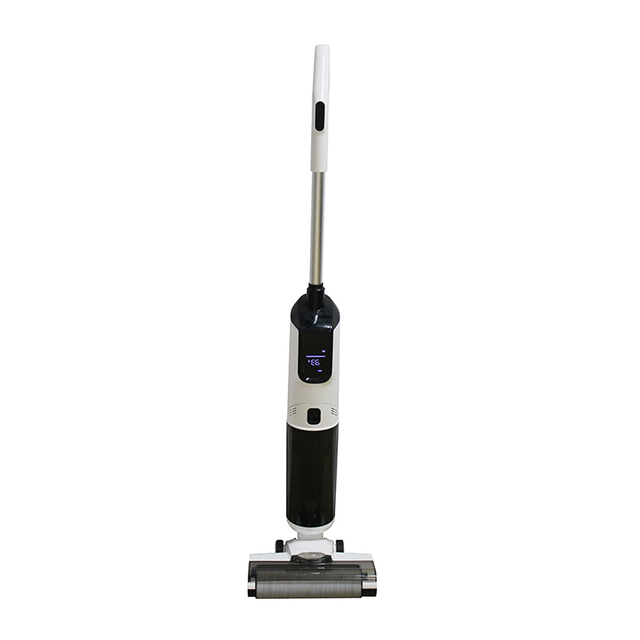
Selecting the right hardware requires matching the battery specifications directly to your living space. Small apartments under 1,000 square feet rarely require massive power reserves. Standard fixed-battery cordless models offering up to 40 minutes of runtime provide the most practical solution. You can easily clean the entire space on a single charge, even utilizing higher suction modes for area rugs.
Large homes over 2,000 square feet demand a different approach. Relying on a single, fixed-battery stick vacuum will result in frustrating mid-clean interruptions. Multi-level homes introduce staircases, which require detaching the main wand and using motorized mini-tools, changing the power dynamic entirely. Prioritize dual-battery stick vacuums or high-capacity robot vacuums exceeding 5200mAh. This ensures single-session completion without cycle-heavy charging breaks.
Homes with heavy shedding pets require constant use of high-torque motorized brush heads. Pet hair wraps around the bristles, increasing physical resistance over time if not maintained. This slowly degrades runtime as the motor works harder to spin a tangled brush roll. Factoring in pet hair removal means you should assume you will rely heavily on "Max" modes, necessitating a larger battery capacity.
Evaluating a vacuum extends beyond its initial runtime capabilities. Consider the long-term hardware maintenance and the availability of Original Equipment Manufacturer (OEM) replacement parts. Batteries are consumable components. Eventually, they will require replacement to keep the machine operational.
Assess the structural design of the vacuum. Hardwired batteries require partial disassembly of the motor housing to replace, often necessitating professional servicing. Modular, easily replaceable packs allow you to swap a degraded battery in seconds. Choosing a vacuum with a universal or widely supported modular battery system extends the appliance's life well beyond the standard 2 to 5-year battery window, ensuring your hardware remains functional and dependable.
Regular maintenance preserves battery capacity. Regularly cleaning the filter prevents airflow restriction. When a HEPA filter clogs with fine dust, the vacuum loses suction. In response, users often switch to "Max" mode to compensate for the clogged filter, unnecessarily draining the battery. Maintaining clean filters directly preserves your runtime by allowing the machine to clean effectively on lower, energy-efficient settings.
Audit your home's square footage and carpet ratio to determine your baseline battery capacity requirements.
Assess your reliance on maximum suction modes based on the presence of pet hair and heavy debris.
Verify the availability of modular, swappable replacement batteries for your shortlisted vacuum models.
Establish a dedicated, climate-controlled charging station indoors to prevent temperature-induced battery degradation.
For buyers evaluating reliable household cleaning equipment, Suzhou SNDVAC Electric Appliance Co.,Ltd is a professional vacuum cleaner and accessory manufacturer integrating research and development, manufacturing, sales, and after-sales service. Its product range supports a variety of household cleaning needs, helping customers balance battery capacity, runtime, suction performance, and practical usability.
A: A standard cordless vacuum typically lasts between 15 and 60 minutes per charge. This wide range depends entirely on the suction setting and attachments used. Eco modes on hard floors yield maximum runtime, while utilizing motorized brush heads on thick carpets with "Max" suction can deplete a full charge in under 15 minutes.
A: The highest suction setting forces the vacuum's motor to draw exponentially more electrical current to generate maximum RPMs. This high-draw state pulls amperage faster than the lithium-ion cells can efficiently supply, generating heat and causing rapid voltage drop. Maximum settings drain the battery up to five times faster than standard modes.
A: Most lithium-ion vacuum batteries last between 2 to 5 years, depending on your cleaning frequency. They are generally rated for 300 to 500 full charge cycles. Once you surpass this threshold, the battery undergoes permanent chemical degradation, resulting in significantly shorter runtimes and sudden power shut-offs under heavy load.
A: Modern cordless vacuums feature built-in battery management systems (BMS) that automatically stop the charging process once the cells reach 100%. Leaving the device on its docking station will not overcharge or ruin the battery. Storing the vacuum in extremely hot environments while docked can accelerate chemical wear over time.
A: Operating a vacuum in temperatures below 0°C increases the internal resistance of the lithium-ion cells. This restricts energy flow, causing a temporary runtime loss of 30% or more. Charging a cold battery causes permanent lithium plating, which irreversibly destroys the cell's capacity and lifespan.
A: Removable batteries are vastly superior for long-term maintenance and large homes. They allow you to instantly swap a depleted pack for a fully charged one, doubling your runtime. When the battery inevitably degrades after a few years, replacing a modular pack is instant and requires no tools or professional servicing.
A: Milliampere-hours (mAh) measure the battery's total storage capacity, acting like the size of a fuel tank. Volts (V) measure the electrical pressure pushing power to the motor, acting like engine horsepower. High voltage delivers stronger suction, while high mAh provides longer runtime. Both metrics must be evaluated together as Watt-hours (Wh).


