
- All
- Product Name
- Product Keyword
- Product Model
- Product Summary
- Product Description
- Multi Field Search
Views: 0 Author: Site Editor Publish Time: 2026-08-18 Origin: Site


The floorcare equipment sector is moving away from traditional carbon-brush motors toward electronically commutated systems. We see this shift heavily in cordless, handheld, and high-performance extraction units. For years, operators dealt with the physical limitations of standard brushed vacuums. Suction power drops as components heat up. Motors burn out from internal friction. The units are heavy, loud, and drain batteries fast on job sites. A brushless motor vacuum cleaner solves these mechanical failures. By removing physical contact points inside the motor housing, engineers eliminated the primary source of wear and energy loss. This technical evaluation breaks down how the technology works in the field. We will look at performance metrics, ergonomic changes, and operational lifespans to help you match the right motor architecture to your specific residential or commercial cleaning requirements.
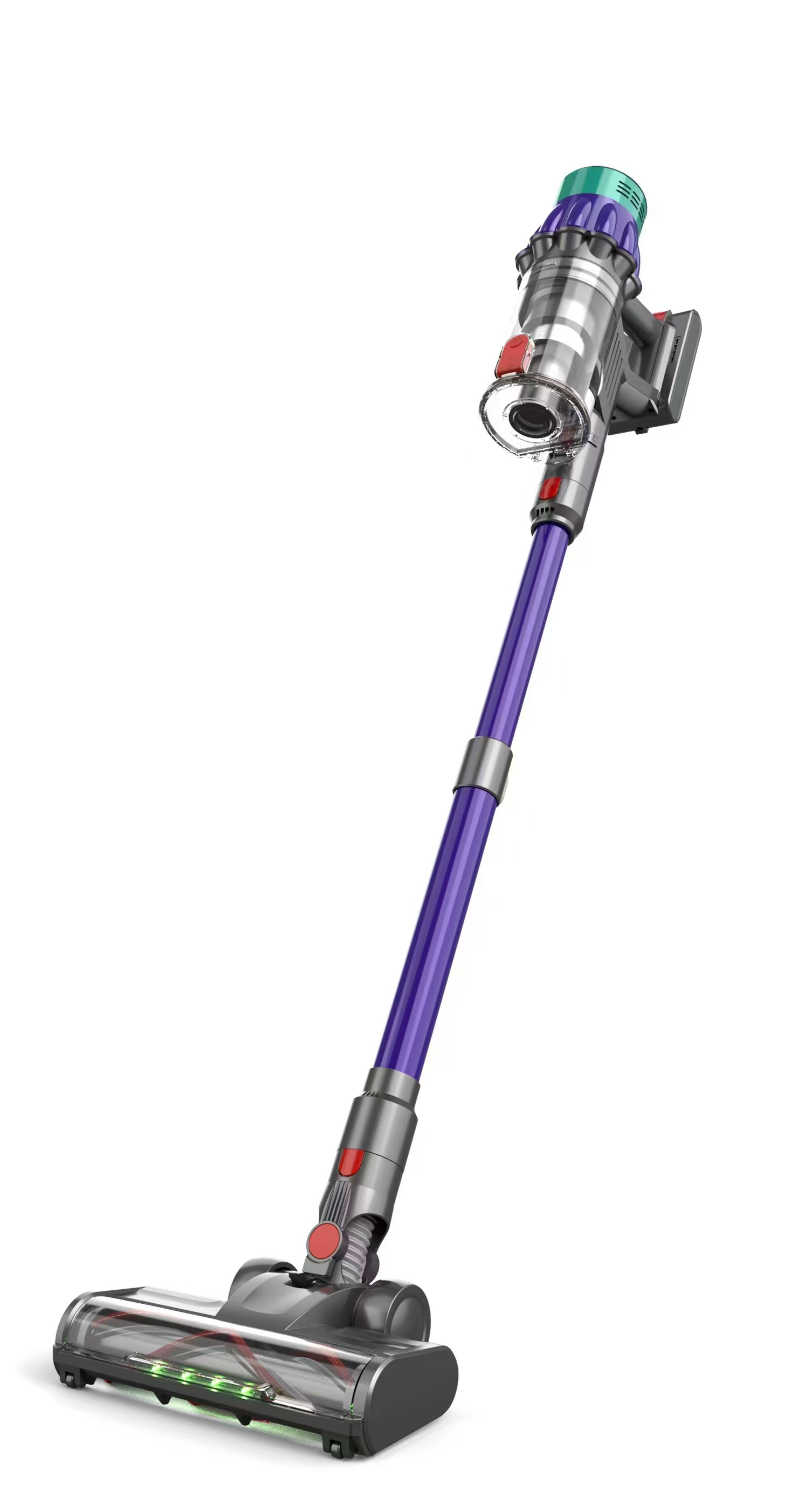
Frictionless Operation: Brushless motors use electronic controllers and magnets instead of physical carbon brushes, eliminating internal friction, sparking, and carbon dust emissions.
Superior Efficiency & Power: The absence of physical resistance allows brushless vacuums to convert more electrical energy directly into suction power, significantly extending battery life in cordless models.
Compact & Lightweight Design: Without bulky brush assemblies, these motors offer a higher power-to-weight ratio, enabling the sleek, ergonomic designs of modern stick and handheld vacuums.
Extended Lifespan & Low Maintenance: Without brushes that wear down over time, brushless motors offer a substantially longer operational life and require zero internal motor maintenance.
Table of Contents
To understand the operational advantages, you must look at the internal mechanics. A brushless DC (BLDC) motor replaces mechanical switching with an electronic controller. Standard motors use spring-loaded carbon blocks, known as brushes, that physically rub against a copper commutator on the spinning rotor. This physical connection transfers the electrical current. BLDC motors remove this physical bridge entirely.
This architecture is identical to the motors driving electric vehicles and industrial CNC machines. Engineers scaled down the stators and rotors to fit inside handheld and canister floorcare units. The crossover from heavy industry brings a massive upgrade in reliability to daily cleaning equipment.
The system relies on three main components: the stator, the rotor, and the electronic control unit (ECU). The stator is the stationary outer ring wrapped in copper wire coils. The rotor is the spinning center shaft embedded with permanent neodymium magnets. Instead of brushes transferring current, the ECU acts as a rapid-fire switch. It uses components called MOSFETs to send precise pulses of electricity to the stator coils. This creates a rapidly rotating magnetic field.
The permanent magnets on the rotor chase this magnetic field, causing the shaft to spin. To keep the timing perfect, many units use Hall effect sensors. These sensors detect the exact position of the rotor magnets and tell the ECU when to fire the next electrical pulse. Advanced sensorless designs measure the back-electromotive force generated by the spinning magnets to determine rotor position. This electronic commutation happens thousands of times per second. The result is an impeller that spins in excess of 100,000 RPM, generating massive negative pressure without any physical parts grinding together.
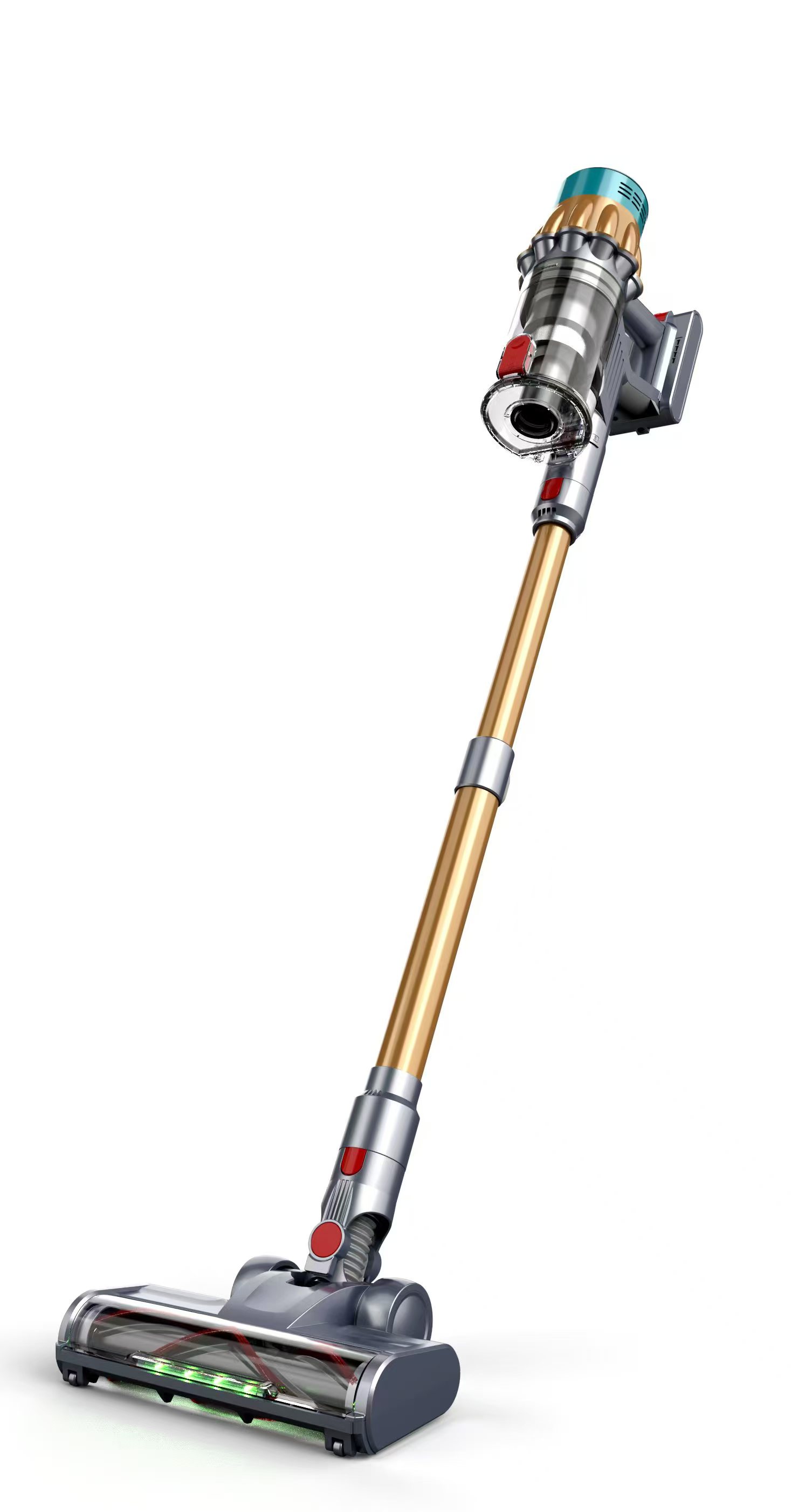
The physical differences between the two motor types dictate how they perform on the floor. Friction is the primary enemy of any mechanical system. In a brushed motor, the constant scraping of carbon against copper generates severe heat. Heat represents wasted electrical energy. Instead of turning electricity into suction, the motor turns it into thermal waste. Brushless systems operate with near-zero internal friction. The only physical contact points are the sealed ball bearings supporting the rotor shaft. This frictionless environment allows the motor to convert a significantly higher percentage of electrical input directly into mechanical output.
This efficiency changes the RPM capabilities. A heavy-duty brushed motor typically maxes out around 30,000 to 35,000 RPM. If you push it faster, the friction melts the brush housings or shatters the commutator. BLDC motors easily sustain 100,000 to 125,000 RPM. This massive rotational speed drives the centrifugal impeller faster, moving more cubic feet of air per minute (CFM) and generating higher static water lift.
Weight and ergonomics also shift dramatically. A traditional motor requires a bulky steel housing to contain the brush assemblies, springs, and large copper commutators. By stripping these components away, manufacturers shrink the motor footprint. A BLDC motor producing 400 Air Watts might weigh a third of what a comparable brushed motor weighs. When you mount this motor at the handle of a stick vacuum, the reduced weight eliminates wrist fatigue. You can maneuver the cleaning head around obstacles or lift the unit for overhead extraction without straining your forearm.
Acoustics change just as noticeably. Brushed motors produce a distinct, high-pitched mechanical whine accompanied by the crackle of electrical arcing. BLDC motors eliminate the mechanical grinding and sparking. The primary sound you hear is the rush of air moving through the cyclonic separators. Manufacturers can then apply acoustic dampening foam specifically tuned to muffle airflow frequencies, resulting in a machine that operates at a much lower decibel level.
Motor Architecture Specifications
Specification | Standard Brushed Motor | Brushless (BLDC) Motor |
|---|---|---|
Commutation Method | Mechanical (Carbon Brushes) | Electronic (ECU/MOSFETs) |
Average Maximum RPM | 30,000 - 35,000 RPM | 100,000 - 125,000+ RPM |
Thermal Output | High (Friction generates heat) | Low (Highly efficient energy transfer) |
Wear Components | Carbon brushes, commutator, bearings | Bearings only |
Particulate Emissions | Expels fine carbon dust internally | Zero carbon dust emissions |
Field performance relies heavily on how the motor interacts with the power source. In cordless applications, battery life is the primary bottleneck. Lithium-ion batteries have a specific discharge curve. As the battery drains, the voltage drops. When you pair a brushed motor with a draining battery, the motor speed drops linearly with the voltage. You hear the vacuum pitch lower, and you watch the suction fade long before the battery is actually dead.
A BLDC motor prevents this fade. The electronic controller actively monitors the incoming voltage. As the voltage drops, the controller pulls slightly more amperage to maintain the exact same magnetic field strength. The impeller continues spinning at peak RPM until the battery management system hits the low-voltage cutoff and shuts the unit down. You get maximum suction performance for the entire runtime.
Motor degradation is another major factor. Carbon brushes are sacrificial parts. They are designed to wear down. Every hour the vacuum runs, the brushes get shorter. Eventually, the spring pushes the bare metal wire against the commutator, destroying the motor. BLDC motors have no sacrificial wear parts. The operational lifespan is dictated entirely by the quality of the sealed ball bearings and the durability of the electronic control board. A well-built BLDC unit will run for thousands of hours without a drop in performance.
Indoor air quality directly benefits from this design. As carbon brushes grind down, they turn into microscopic black dust. The motor cooling fan blows this carbon dust directly out of the exhaust. If you open a heavily used brushed vacuum, the interior is coated in black soot. BLDC motors produce zero carbon emissions. This keeps the internal HEPA filters cleaner and prevents the machine from exhausting particulate matter back into the room.
Inspect HEPA filters monthly, as BLDC motors pull higher CFM and load filters faster.
Check the floor head brush roll for tangled hair, which increases resistance and forces the ECU to draw more amperage.
Monitor the battery pack temperature during heavy use; the motor will outlast the battery cells if they are repeatedly overheated.
Ensure all wand and hose seals are intact to maximize the high static water lift generated by the motor.

Matching the motor to the environment prevents premature equipment failure. In residential settings, users need lightweight maneuverability to navigate around furniture and transition between hard floors and carpets. Cordless stick vacuums and autonomous robots dominate this space. The BLDC motor provides the necessary power-to-weight ratio to make these battery-operated devices viable for whole-house cleaning.
Commercial and industrial environments present a different challenge. Janitorial crews and construction contractors run equipment for hours at a time. Traditional industrial extractors use bypass motors, where the working air is kept separate from the cooling air. Even with bypass cooling, brushed motors overheat during continuous duty cycles. The heat builds up in the brush housings until the thermal overload switch trips.
Brushless bypass motors handle continuous duty cycles without issue. Because they generate very little internal heat, you can run them continuously in manufacturing facilities or during heavy concrete grinding operations. The lack of heat buildup prevents thermal shutdowns and keeps the crew working.
Hazardous material extraction requires strict safety protocols. Standard motors constantly generate small electrical sparks where the brushes jump the gaps on the commutator. If you vacuum up combustible dust, those sparks can ignite the dust cloud inside the machine. BLDC motors are inherently spark-free. While the motor itself does not make the entire vacuum explosion-proof, it is a mandatory baseline component for machines seeking ATEX or CSA certification for hazardous environments.
Evaluating floorcare equipment requires looking past the initial acquisition. You must analyze the operational longevity and the conceptual trade-offs of the technology. High-performance engineering requires a larger upfront investment. The electronic controllers, neodymium magnets, and precision machining add to the manufacturing baseline.
You balance this initial outlay against the replacement frequency. A standard brushed vacuum used daily in a commercial setting will typically burn through its motor within 12 to 18 months. You then face the downtime of sending the unit out for repair or the hassle of procuring a replacement. A brushless unit in the exact same environment will operate for years without motor degradation. The extended lifespan reduces the frequency of equipment replacement and eliminates the downtime associated with burned-out armatures.
However, you must identify over-engineered solutions. Not every cleaning task requires a high-RPM BLDC motor. Match the engineering to the intensity of the application.
Light-duty applications: If you need a secondary vacuum for occasional dry spills in a residential garage, a standard motor provides adequate suction for a fraction of the investment.
Infrequent usage: Equipment that sits in a closet and runs for ten minutes a week will never accumulate enough hours to wear out a set of carbon brushes.
Resource-limited scenarios: When immediate acquisition limits are strict and long-term longevity is a secondary concern, traditional motors remain a viable, functional choice.
Procuring the right equipment requires navigating misleading marketing terminology. Manufacturers know that brushless technology is highly sought after, so they often obscure the motor type on lower-end models. The primary risk is failing to verify true BLDC architecture. Terms like "digital motor," "smart suction," or "advanced cyclonic power" are marketing phrases. They do not indicate the internal mechanics. You must read the technical specification sheet. Look for the exact terms "Brushless," "BLDC," or "Electronically Commutated." If the documentation does not explicitly state the motor is brushless, you should assume it relies on standard carbon brushes.
For cordless units, the battery ecosystem presents a secondary risk. A BLDC motor will outlast the lithium-ion cells powering it. Lithium-ion batteries degrade chemically over hundreds of charge cycles. Eventually, the battery will no longer hold a charge, even though the motor is in perfect condition. Before acquiring a cordless unit, verify that the battery packs are removable and replaceable. Check the availability of replacement packs. A vacuum with a hardwired, non-removable battery becomes electronic waste as soon as the cells degrade.
Finally, evaluate the repairability of the unit. When a traditional motor fails, a technician can often swap the carbon brushes in ten minutes. BLDC motors are different. If the electronic control board suffers a failure, often due to moisture exposure or severe static discharge, you cannot simply solder a new microchip. The entire motor and board assembly usually requires replacement. Ensure the equipment carries a robust manufacturer warranty that specifically covers the electronic components and the motor assembly for multiple years.
Audit your current floorcare equipment inventory to identify units suffering from frequent motor burnout, thermal shutdowns, or rapid battery drain.
Measure the square footage and identify the primary debris types in your facility to determine the required Air Watts and CFM for your next equipment upgrade.
Review manufacturer specification sheets meticulously to confirm the presence of a true electronically commutated motor, ignoring generic digital marketing terms.
Verify the availability, replacement process, and warranty coverage for lithium-ion battery packs on any cordless models under consideration.
Professional Vacuum Cleaner Manufacturing & Support
Founded in 2016 in Suzhou, Suzhou SNDVAC Electric Appliance Co.,Ltd is a professional manufacturer of household vacuum cleaners and accessories, integrating research and development, manufacturing, sales, and after-sales service. With established production capabilities and quality management experience, SNDVAC supports customers with vacuum cleaner solutions for different cleaning requirements and application environments.
A: Yes, for frequent users and commercial applications. The long-term operational value is strong due to extended motor lifespans and superior energy efficiency. They provide significantly longer cordless runtimes and maintain peak suction better than traditional alternatives. If you operate the equipment daily, the initial acquisition premium is justified by the lack of replacement frequency.
A: The motor itself is completely maintenance-free. There are no carbon brushes to replace, commutators to clean, or internal friction points to lubricate. However, the vacuum unit still requires standard upkeep. You must regularly wash or replace the HEPA filters, clear blockages from the extraction wand, and untangle debris from the floor brush roll.
A: A brushless motor can easily exceed 10,000 hours of operational life, often lasting up to a decade of heavy use. Standard brushed motors typically wear out between 500 and 1,000 hours as the physical carbon brushes grind down to the metal springs. A BLDC motor will usually outlast the vacuum's plastic chassis.
A: It provides the mechanical potential for better suction. The frictionless design allows the rotor to spin at much higher RPMs, generating more negative pressure and higher CFM. However, overall suction performance also depends heavily on the vacuum's airflow engineering, the quality of the internal seals, and the efficiency of the floor head design.
A: They are lighter because they eliminate bulky mechanical brush assemblies, heavy steel housings, and large copper commutators. They are quieter because they remove the physical friction of brushes scraping against metal at high speeds. This eliminates high-pitched mechanical whining and electrical sparking, leaving only the sound of rushing air through the cyclones.
A: They do not burn out from physical brush friction, but they can still experience failure. The most common failure points are electronic control board malfunctions or internal sealed bearing wear. Severe airflow blockages caused by clogged filters can also cause the electronic controller to overheat if the internal thermal safety sensors fail to trigger a shutdown.


