
- All
- Product Name
- Product Keyword
- Product Model
- Product Summary
- Product Description
- Multi Field Search
Views: 0 Author: Site Editor Publish Time: 2025-12-12 Origin: Site


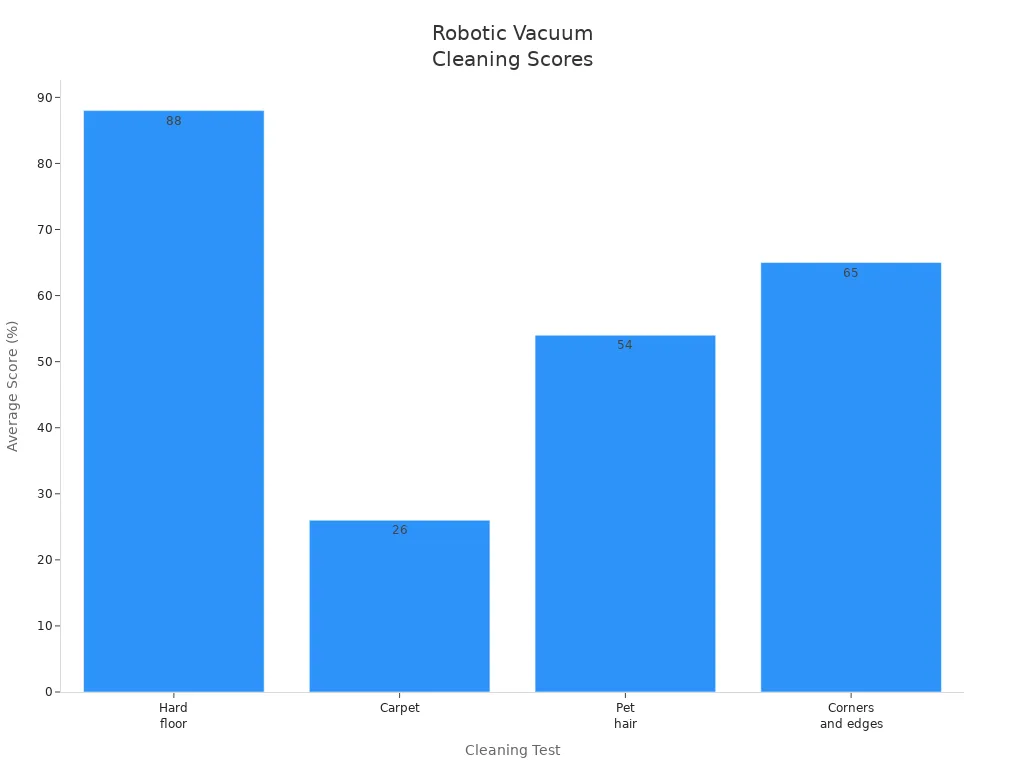
You want a clean home with less effort. Robotic vacuum cleaners offer automated cleaning, smart features, and reach under furniture with ease. Many users find them convenient, but you should consider their limitations. High costs and less effective carpet cleaning remain common concerns. The chart below shows cleaning performance across surfaces:
A Vacuum Cleaner can make daily maintenance easier, but you need to weigh pros and cons before buying.
You want to spend less time on chores. Robot vacuums deliver hands-free smart cleaning, letting you focus on other tasks while your floors stay tidy. You can activate cleaning with a simple tap or voice command. Many models use sensors and mapping technology to navigate your home, adapting to different surfaces and avoiding obstacles. SNDVAC offers a wide range of robot vacuum models, each designed to maximize efficiency and minimize your involvement.
Tip: Smart cleaning features can save you hours each week.
Check the table below to see how much time users typically save:
Source | Time Saved per Week |
|---|---|
User Testimonial | Over 2 hours |
Study by Cleaning Company | Over 4 hours |
Another Study | Up to 70% of cleaning time saved |
Robot vacuums excel at daily cleaning, especially in busy households. You can rely on them to maintain a consistent level of cleanliness without manual effort.
You can set your robot vacuum to clean at specific times, even when you are not home. Scheduling options allow you to customize cleaning routines for different days or rooms. This feature ensures that daily cleaning happens automatically, reducing the need for reminders or manual operation. SNDVAC’s international reputation stems from offering models with flexible scheduling, making them suitable for homes and offices worldwide.
Many users appreciate the ability to program cleaning cycles for early mornings, late evenings, or during work hours. You can enjoy a clean floor every day without lifting a finger.
Noise levels matter, especially if you work from home or have young children. Robot vacuums operate much quieter than traditional vacuum cleaners. You can run a robot vacuum during meetings, naps, or movie nights without disturbing anyone.
Type of Vacuum | Noise Level (dB) |
|---|---|
Robot Vacuums | 50 to 60 |
Traditional Vacuums | 70 to 80 |
SNDVAC’s robot vacuums maintain low noise levels, making them ideal for apartments and shared spaces. You can enjoy daily cleaning without the loud interruptions common with older vacuum models.
Robot vacuums use advanced sensors and compact designs to reach areas that traditional vacuums often miss. You can expect thorough cleaning under beds, sofas, and cabinets. These devices navigate around furniture legs and tight corners, ensuring that dust and debris do not accumulate in hard-to-reach spots.
SNDVAC’s product variety includes models with enhanced navigation systems, suitable for homes with complex layouts. You benefit from consistent daily cleaning, even in rooms with many obstacles.
Note: Advanced maneuverability means less moving furniture and more efficient cleaning in every room.
If you have pets, you know how quickly hair and dander can build up. Robot vacuums are effective on hard floors, easily picking up loose pet hair. You can rely on them for daily cleaning, which prevents hair from accumulating and reduces allergens in your home.
Robot vacuums excel at daily cleaning, keeping pet hair under control.
You can maintain a healthier environment with less manual effort.
For thick carpets or high-shedding periods, you may need to supplement with manual vacuuming.
SNDVAC’s robot vacuums are designed to handle pet hair and allergens efficiently, supporting cleaner air and surfaces in homes worldwide.

You may notice that robotic vacuums often come with a higher initial price tag compared to traditional vacuum models. The advanced technology, sensors, and smart features contribute to this cost. If you are considering a robot vacuum for your home, you should review the price ranges below:
Type of Cleaner | Price Range |
|---|---|
Robotic Vacuum Cleaners | $500 to over $2,000 |
Traditional Vacuum | Below $200 to $300 |
You invest more at the beginning for robotic vacuums, but you gain convenience and automation. SNDVAC’s models meet international safety and performance standards, which can justify the investment for many users. Certifications such as ISO9001, RoHS, CE, and CCC help you trust the quality and safety of your purchase.
Setting up robotic vacuums requires some technical know-how. You need to connect the device to Wi-Fi, download an app, and sometimes map your home for optimal cleaning. If you are not familiar with smart devices, this process may feel overwhelming. You may encounter issues with connectivity, app updates, or sensor calibration.
Maintenance is another area where you need to pay attention. Robot vacuums require regular cleaning of sensors and moving parts. Neglecting maintenance can lead to reduced performance or malfunctions. The table below highlights common maintenance issues you may face:
Maintenance Issue | Description |
|---|---|
Getting Stuck or Trapped | Robot vacuums often get stuck in tight spaces due to obstacles like cords or furniture. |
Incomplete Cleaning or Missing Spots | Sensors may miss areas, leading to incomplete cleaning. |
Battery and Charging Issues | Problems with battery efficiency can arise from dirty contacts or degraded batteries. |
Loud or Unusual Noises | Strange sounds may indicate issues with moving parts that need regular cleaning. |
Problems with Sensors | Dust on sensors can hinder navigation; regular cleaning is necessary. |
Wi-Fi Connectivity and App Problems | Connectivity issues can occur if the vacuum is out of Wi-Fi range or if the app is outdated. |
Emptying and Maintenance Neglect | Regular maintenance is crucial; neglect can lead to reduced performance and malfunctions. |
SNDVAC provides 24-hour online support and fast logistics distribution, which can help you resolve technical challenges quickly.
Robotic vacuums excel at daily cleaning tasks, but you may find them less effective for deep cleaning. These devices remove dust and small debris from hard floors, but struggle with thick carpets or embedded pet hair. Lower suction power limits their ability to clean deeply. Upright traditional vacuum models offer stronger suction and can adapt to different surfaces for thorough cleaning.
Robotic vacuums are mainly effective for daily cleaning tasks, such as removing dust and small debris, particularly on hard floors.
They struggle with deep cleaning tasks, especially on thick carpets or when removing embedded pet hair due to their lower suction power.
In contrast, upright vacuum cleaners offer stronger suction, making them more effective for deep cleaning carpets and rugs, and they can adapt suction power based on the surface for thorough cleaning.
If you need deep cleaning for carpets or rugs, you may want to supplement robotic vacuums with a traditional vacuum.
You may experience navigation challenges with robotic vacuums. These devices rely on sensors to avoid obstacles and map your home. However, cords, furniture legs, and uneven surfaces can cause them to get stuck or miss spots. You may need to clear the floor of small objects before starting a cleaning cycle.
Problems with sensors can also affect navigation. Dust or debris on sensors may hinder performance, leading to incomplete cleaning. Regular cleaning of sensors helps maintain accuracy. SNDVAC’s robot vacuums feature advanced navigation systems, but you should still monitor their performance in rooms with many obstacles.
Tip: Place charging stations in open areas and remove loose cords to improve navigation and reduce the risk of getting stuck.
Battery life and dustbin capacity are important factors for robotic vacuums. Most models require battery replacement after two to five years of regular use. Battery life depends on capacity, usage patterns, and the cleaning environment. Frequent cleaning can help conserve battery life by preventing dirt buildup.
Most robotic vacuums require battery replacement after 2–5 years of regular use.
Battery life is influenced by factors such as battery capacity, usage patterns, and cleaning environment.
Regular cleaning can conserve battery life by preventing dirt accumulation.
Dustbin capacity is usually smaller than that of traditional vacuum models. You may need to empty the dustbin more often, especially in homes with pets or high foot traffic. SNDVAC’s after-sales support includes professional technical assistance, which can help you manage battery and maintenance needs efficiently.
International certifications, such as SGS Performance Marks and UL certification, enhance consumer trust in robotic vacuums. These certifications ensure safety, reliability, and compatibility with smart home devices, making your investment more secure.
When you compare cleaning performance, you notice clear differences between a robot vacuum and a traditional vacuum cleaner. Robot vacuums work well on hard floors and can handle both dry and wet cleaning if equipped with mop attachments. However, they often struggle with carpets and may leave stubborn stains behind. In tests, some models failed to remove stains from laminate flooring on the first pass, while others performed better with the help of cleaning solutions. Traditional vacuum cleaners usually deliver stronger suction and excel at removing dirt from thick carpets and corners. You get more thorough results when you need deep cleaning.
Robot vacuums offer versatility for hard surfaces.
Traditional vacuum cleaners outperform on carpets and tough stains.
Manual cleaning methods still work best for stubborn dirt.
You experience a significant difference in convenience. Robot vacuums operate autonomously, allowing you to schedule cleaning or control them through smart home integration. You can let the device clean while you focus on other tasks. Traditional vacuum cleaners require manual operation, which can be time-consuming and physically demanding. If you value hands-free cleaning efficiency, robot vacuums provide a clear advantage.
The cost of ownership varies between the two options.
Factor | Robot Vacuums | Traditional Vacuums |
|---|---|---|
Initial Purchase Price | Higher upfront costs | Lower initial cost |
Maintenance and Consumables | Potentially higher over time | Generally lower |
Energy Consumption | Often more energy-efficient | Can consume more electricity |
Convenience | Operate autonomously, save time | Manual operation, time-consuming |
You pay more upfront for a robot vacuum, but you may save time and energy in the long run.
Robot vacuums are generally more effective on hard flooring types like tile, laminate, or hardwood, rather than carpets. Their size, approximately 13 inches in diameter, allows them to navigate smaller spaces, but they can get stuck under furniture or tangled in cords. Additionally, they are typically designed for single-story homes, which may limit their effectiveness in larger, multi-level homes.
If you live in a small or single-story home, a robot vacuum can cover most areas efficiently. For larger or multi-level homes, a traditional vacuum cleaner may suit your needs better.
Maintenance requirements differ for each type.
Type of Vacuum | Maintenance Requirements |
|---|---|
Robot Vacuums | Require regular emptying, filter cleaning, and brush roller cleaning. |
Traditional Vacuums | Need bags, filters, and belts replaced regularly, and brush roller cleaned. |
You need to clean sensors and brushes on robot vacuums, while traditional vacuum cleaners demand more frequent filter and bag changes. Both require regular attention to maintain cleaning efficiency.
You manage a packed schedule and want to simplify home cleaning. Robot vacuums save you valuable time by working autonomously. You can schedule cleaning sessions to run while you are at work or asleep. SNDVAC offers models with advanced scheduling features, so you never need to worry about missing a cleaning day. You focus on your priorities while your floors stay clean.
Tip: Set your robot vacuum to clean during your busiest hours. You return to a tidy home without lifting a finger.
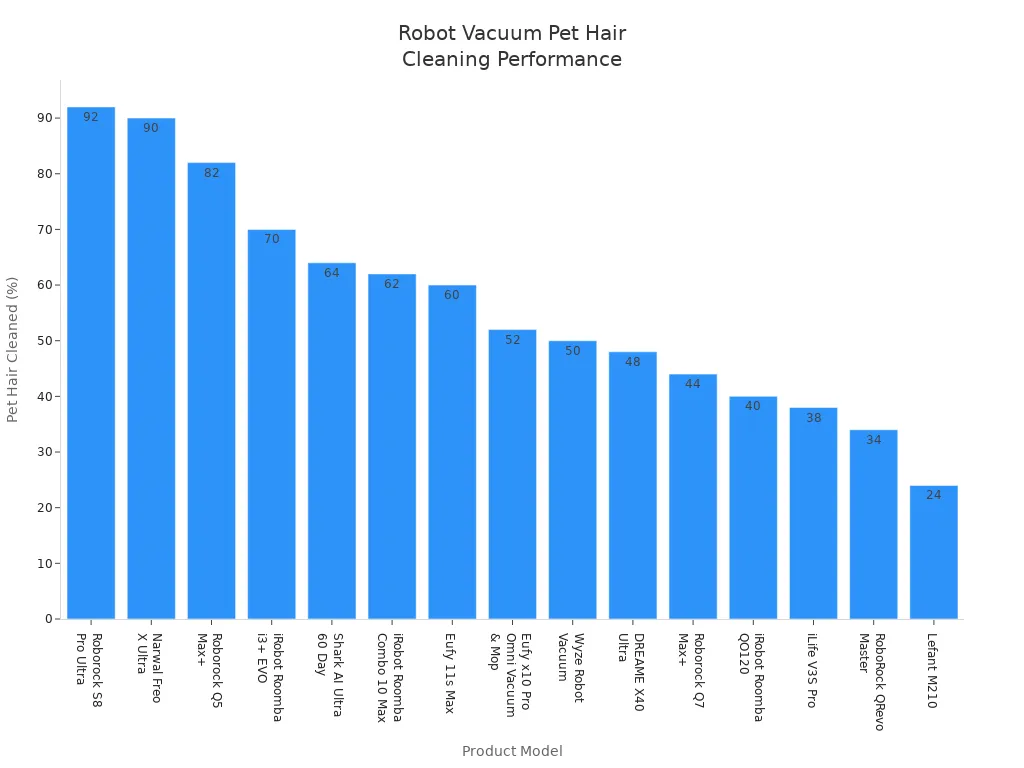
You deal with pet hair and dander every day. Robot vacuums excel at picking up fur from hard floors and low-pile carpets. You maintain a healthier environment for your family and pets. SNDVAC’s product range includes models designed for homes with pets, featuring strong suction and specialized brushes. The chart below shows how different robot vacuums perform in pet hair cleaning:
You may find traditional home cleaning tasks physically demanding. Robot vacuums offer hands-free operation, making cleaning accessible for individuals with mobility challenges. You gain independence and confidence by managing cleaning without assistance. SNDVAC’s robot mop vacuums provide reliable performance with minimal user interaction. The table below highlights key benefits:
Benefit | Description |
|---|---|
Hands-free functionality | Robot vacuums operate autonomously, requiring minimal user interaction. |
Independence and self-confidence | They empower you to clean your home independently, enhancing self-esteem. |
Health benefits | Regular cleaning helps reduce allergens and dust. |
Reduced physical effort | They require significantly less physical energy compared to traditional vacuums. |
You enjoy integrating smart devices into your home. Robot vacuums connect with apps and voice assistants, offering advanced features like mapping and remote control. You experiment with automation and optimize your home cleaning routines. SNDVAC’s models support smart home compatibility, giving you more control over cleaning schedules and settings.
You may live in a compact apartment or a spacious house. Robot vacuums adapt to different environments. SNDVAC’s diverse lineup includes compact models for small spaces and powerful units for larger homes. You select a model that matches your floor plan and cleaning needs. The best-performing robot vacuums handle pet hair and debris efficiently, regardless of home size.
Note: Choose a robot vacuum with navigation suited to your home’s layout. You maximize cleaning coverage and minimize missed spots.
You benefit from robot vacuums if you value convenience, have pets, face mobility challenges, love smart technology, or want efficient home cleaning in any space.
You see clear differences between robot vacuums and traditional vacuum cleaners. Robot vacuums offer smart features, scheduled cleaning, and easy operation. Traditional vacuums provide stronger cleaning power. Consider your needs using the table below:
Pros (Robot Vacuums) | Cons (Robot Vacuums) |
|---|---|
Hands-free, regular cleaning | Less cleaning power than traditional models |
Smart home integration and scheduling | Privacy and data security concerns |
If you value convenience, smart cleaning, and support from a trusted brand like SNDVAC, a robot vacuum may fit your lifestyle.
You should run your robot vacuum daily for best results, especially if you have pets or high foot traffic. For less busy homes, two to three times a week keeps floors clean.
You can use a robot vacuum for daily maintenance. For deep cleaning, you still need a traditional vacuum. Robot vacuums work best as a supplement, not a full replacement.
You can use most robot vacuums on hard floors, tile, and low-pile carpets. Thick carpets or rugs may reduce cleaning performance. Always check your model’s specifications for compatibility.
You should empty the dustbin after each use. Clean the brushes and filters weekly. Wipe sensors with a dry cloth to keep navigation accurate. Regular maintenance extends your vacuum’s lifespan.
You can safely use robot vacuums in homes with pets. Many models handle pet hair well and help reduce allergens. Always check for pet-friendly features before purchasing.


