
- All
- Product Name
- Product Keyword
- Product Model
- Product Summary
- Product Description
- Multi Field Search
Views: 0 Author: Site Editor Publish Time: 2026-07-24 Origin: Site


The transition from traditional corded uprights to a battery-powered alternative offers undeniable maneuverability, but it introduces complex new variables. Buyers frequently overpay for marketing features like laser illumination or exaggerated runtime claims while under-evaluating performance metrics. These metrics dictate whether the vacuum can actually handle specific floor plans, pet hair volumes, and maintenance tolerances. To avoid buyer’s remorse and select a unit capable of serving as a primary or secondary cleaner, you must evaluate these devices through a strict technical lens. Knowing how to choose cordless stick vacuum models requires understanding battery degradation, variable suction power, and restrictive dust bin capacities. Here is the framework to systematically evaluate and select the right unit based on verifiable metrics and household realities.
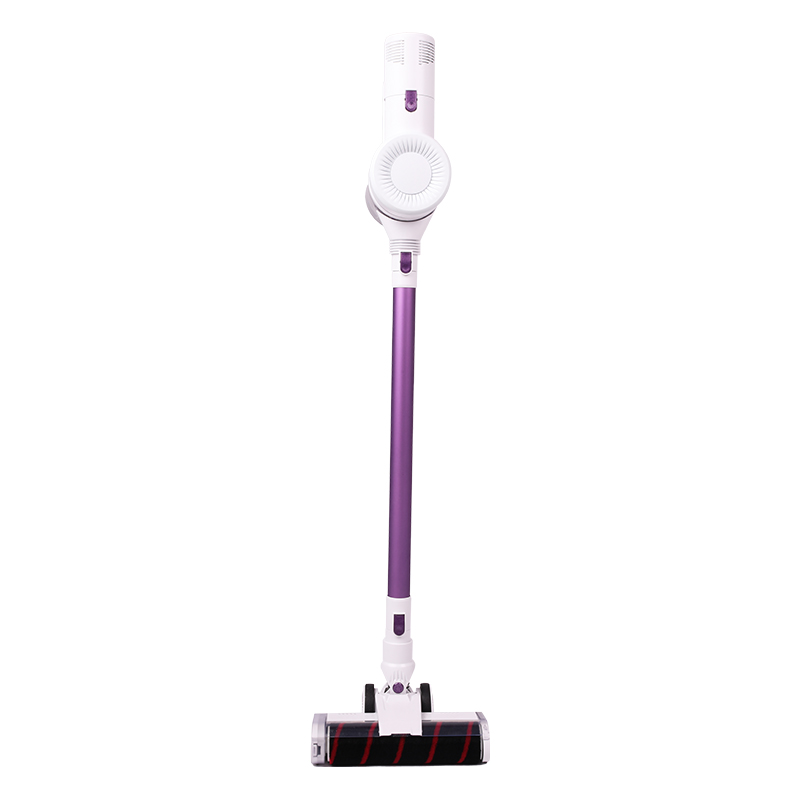
Runtime Claims Are Conditional: Manufacturer battery life estimates are almost always based on the lowest suction setting without motorized attachments; evaluate true runtime based on max-power usage and motorized brush demands.
Dust Bin Capacity Dictates Workflow: Smaller bins (under 0.5L) require frequent interruptions. Self-emptying docks solve this but significantly increase the unit's footprint.
Filtration Equals Performance: High suction is useless if fine dust is exhausted back into the room. Fully sealed systems with true HEPA filtration are non-negotiable for allergy management.
Longevity Hinges on Modularity: The lifespan of a cordless stick vacuum is directly tied to the availability of replacement parts—specifically click-in, swappable batteries, washable filters, and clear accessory compatibility.
Table of Contents
Calculate realistic cleaning times versus manufacturer claims before making a purchase decision. A 60-minute advertised runtime often translates to merely 10 to 15 minutes when operating on "Boost" or "Max" mode. Motorized floor heads draw significant power, draining lithium-ion cells rapidly. You must map your actual cleaning habits against these realistic maximum-power durations. If your home exceeds 1,500 square feet, a single battery charge on high suction will rarely suffice for a complete cleaning cycle. You need to look at the amp-hour (Ah) rating of the battery pack. A 2.0Ah battery will drain much faster under heavy load than a 4.0Ah pack, regardless of the voltage.
Evaluate the impact of multi-level homes on weight requirements. Determine if you need to carry the unit up stairs frequently. If so, prioritize a lighter motor block, ideally under six pounds. Heavy top-mounted motors create wrist fatigue during extended use. Navigating staircases requires a balanced center of gravity, making the physical weight distribution just as critical as the overall mass. When you are cleaning overhead fixtures or carrying the unit up three flights of stairs, every ounce matters. Look for models where the battery sits below the handle to counterbalance the motor weight.
Hard floors and carpets demand entirely different mechanical approaches. Hard floors benefit immensely from soft, fluffy rollers. These specialized brush heads prevent debris scattering and create a tight seal against the floor, maximizing suction efficiency. They physically wipe fine dust off hard surfaces like tile, laminate, and hardwood. Conversely, medium-to-high-pile carpets require stiff nylon bristles and high-torque motorized heads to agitate embedded dirt. Attempting to clean thick carpets with a soft roller yields poor results, while using stiff bristles on hardwood can cause surface scratching.
Analyze the necessity of auto-suction adjustment features, often labeled as "PowerDetect" or similar proprietary names. Evaluate if dynamic suction scaling based on floor resistance actually improves battery efficiency for your specific floor mix. These sensors detect changes in brush roll resistance or acoustic dust levels, automatically ramping up motor speed on carpets and lowering it on hard floors. While this technology optimizes battery life, it adds mechanical complexity and potential failure points. If you have a home that is 90% hard floors, this feature might be unnecessary overhead.

Differentiate clearly between Air Watts (AW), Pascals (Pa), and Cubic Feet per Minute (CFM). Look for Air Watts as the most reliable indicator of overall cleaning power. An ideal range sits between 100 and 240+ AW on the maximum setting. Pascals measure static pressure, while CFM measures airflow volume. Air Watts combine both metrics to provide a realistic representation of the machine's ability to lift heavy debris and pull fine dust from carpet fibers. Do not be fooled by high Pascal ratings if the CFM is low; you need volume to move the dirt through the wand.
Address cyclonic separation efficiency when reviewing specifications. Poorly designed cyclones allow fine debris to bypass the primary separation chamber and clog the pre-motor filter. This causes rapid suction drop-off as the dust bin fills. High-quality multi-cyclonic systems spin dust out of the airstream before it reaches the filter, ensuring consistent Air Watt output from an empty bin to a full one. You can test this by looking at the pre-motor filter after a week of use; if it is caked in fine dust, the cyclones are failing to do their job.
Compare fixed internal batteries versus swappable, click-in batteries. Fixed batteries pose a significant risk, rendering the entire vacuum obsolete once the lithium-ion cells degrade. Swappable batteries allow you to double your runtime instantly and extend the appliance's functional lifespan by years. When a click-in battery fails, you simply purchase a replacement pack rather than discarding the entire motor unit. This modularity is the single most important factor in the lifespan of the machine.
Evaluate the emerging category of power-tool ecosystem compatibility. Many modern vacuums are powered by shared 18V or 20V batteries from established tool brands. Analyze the benefits of using existing workshop batteries to bypass proprietary replacement markups. This modular approach provides infinite runtime if you already own multiple compatible battery packs. Furthermore, evaluate voltage systems. Higher voltage systems generally correlate to sustained power output and improved motorized brush roll efficacy under heavy loads. A 25V+ system will typically maintain brush roll RPM better on thick carpet than an 18V system.
Map standard bin sizes, ranging from 0.3L to 0.8L and above, directly to your cleaning habits. Small bins cause frustrating workflow interruptions, especially in homes with heavy pet shedding. A 0.3L bin will require emptying multiple times during a single whole-house cleaning session. If you have multiple pets, prioritize a bin capacity of at least 0.6L to maintain efficiency. Look for bins that eject dirt linearly, pushing the debris out with a collar mechanism rather than relying on gravity alone.
Evaluate the rise of self-emptying docks. Weigh the convenience of automated emptying against the recurring requirements of proprietary dirt bags and the loss of compact storage space. While these docks eliminate the dust cloud associated with manual emptying, they demand floor space and tie you to a continuous purchase cycle for replacement bags. If you have severe dust allergies, this trade-off is often worth it. If you are focused on minimal maintenance and footprint, a standard manual-empty bin is superior.
Distinguish carefully between "HEPA-style" filters and fully sealed, true HEPA systems. A true HEPA filter traps 99.97% of particles down to 0.3 microns. However, a HEPA filter is useless if the vacuum chassis leaks air. Look for "fully sealed system" certifications to ensure fine dust is not exhausted back into your living space. This is a non-negotiable requirement for allergy and asthma management. You can often feel air leaking from the seams of cheaper models during operation.
Assess the ongoing maintenance requirements of the filtration system. Compare the long-term labor of washable lifetime filters versus mandatory periodic filter replacements. Washable filters require a 24-hour drying period, which takes the vacuum out of commission. Replaceable filters offer immediate readiness but add to the long-term operational expenses. Some high-end models use a combination of washable pre-motor filters and replaceable post-motor HEPA filters to balance maintenance and performance.
Analyze handle weight versus total unit weight. Top-heavy motor designs place direct strain on the wrist and forearm during extended overhead or under-furniture cleaning. A vacuum weighing seven pounds total might feel excessively heavy if five pounds rest directly above your grip. Test the pivot mechanism of the floor head to ensure it articulates smoothly without requiring excessive wrist torque. The floor head should steer easily around table legs with a simple twist of the wrist.
Compare trigger-style power switches against toggle-style on/off buttons. Trigger switches require continuous pressure to operate, which conserves battery life by ensuring the motor only runs when actively cleaning. However, this causes finger fatigue during long sessions. Toggle buttons offer hands-free operation, allowing you to adjust your grip freely. Assess storage and charging footprints as well. Wall-mounted docks require drywall drilling near an outlet, whereas self-standing floor docks offer flexible placement without modifying your walls.
Identify high-utility attachments that expand versatility. Motorized mini-pet tools are essential for upholstery and stairs. Flexible crevice tools reach tight automotive spaces. Soft dusting brushes handle delicate surfaces, and articulated extension wands allow for deep under-furniture reach without bending. The value of a cordless stick vacuum increases exponentially with the right attachments. A bare-bones kit will leave you struggling to clean baseboards and car interiors.
Evaluate the ease of attachment connection mechanisms. Quick-release buttons provide secure, satisfying clicks and ensure attachments do not fall off during use. Friction-fit joints degrade over time and become loose. Ensure the main wand detaches smoothly, allowing the unit to convert into a lightweight handheld cleaner in seconds. The transition from floor cleaning to handheld mode should be seamless and require only one hand.

These models are best for quick daily pickups, predominantly hard floors, apartments, and overhead cleaning tasks like ceiling fans or blinds. They prioritize maneuverability above all else. The trade-offs include a smaller dust bin capacity, lower maximum suction typically capped around 100 to 150 Air Watts, and shorter overall battery life. They excel in tight spaces but struggle with deep carpet cleaning.
These robust units are best for deep carpet cleaning, multi-pet households, and serving as the sole vacuum for a large home. They feature high-torque brush rolls and massive suction power. The trade-offs involve a heavier hand-feel, which can cause wrist fatigue during extended use, and bulkier wall mounts or floor docks. They are built to replace corded uprights entirely.
These are best for homeowners who already own cordless power tools, workshop environments, or buyers seeking infinite battery runtimes via swappable battery packs. The trade-offs include more industrial designs, a lack of advanced aesthetic features like built-in dirt-sensing displays, and basic filtration systems compared to high-end dedicated vacuums. They prioritize raw utility and battery cross-compatibility over sleek aesthetics.
Category | Ideal Use Case | Primary Advantage | Notable Trade-Off |
|---|---|---|---|
Lightweight & Nimble | Apartments, Hard Floors, Overhead | Exceptional ergonomics and handling | Limited bin size and peak suction |
Heavy-Duty Replacements | Large Homes, Thick Carpets, Pets | Maximum Air Watts and deep cleaning | Heavier weight and bulkier storage |
Ecosystem Hybrids | Workshops, Tool Owners | Infinite runtime with shared batteries | Industrial design, basic filtration |
Analyze material build quality meticulously. Contrast durable polycarbonate housings and aluminum wands against brittle, lower-grade plastics found in budget models. High-quality plastics flex slightly under impact, whereas cheap plastics shatter. Check the connection points where the wand meets the motor; this is a common stress fracture zone. A well-built machine will have metal reinforcement at high-stress joints and thick rubber gaskets around the dust bin.
Evaluate warranty lengths and terms thoroughly. A one-year warranty on a high-performance unit is a definitive red flag. Look for two-to-five-year warranties that explicitly cover motor and battery defects. Read the fine print to ensure battery degradation is covered, not just catastrophic failure. Some manufacturers prorate battery replacements, while others offer full replacements within the warranty window.
Calculate the three-year operational requirements. Factor in the replacement frequency for HEPA filters, worn brush rolls, and inevitable battery replacements. A machine might require proprietary filters every three months, negating any initial savings. For self-emptying models, calculate the annual requirement of proprietary disposable bags versus the labor of manually cleaning a bagless base station. You must factor these ongoing requirements into your decision-making process.
Motorized floorhead clogging remains a primary frustration. Pet hair wrap chokes the brush roll motor, causing premature failure. Look for anti-tangle combs built into the floorhead or easily removable brush rolls that allow for quick scissor maintenance. Battery capacity loss is another chemical reality. Lithium-ion batteries will lose 20 to 30 percent of their total capacity over 12 to 24 months of heavy, daily use. This is why swappable batteries are critical.
Establish a strict routine maintenance schedule to keep the machine running at peak performance. Neglecting these steps will result in a dead motor or severely reduced suction.
Wash pre-motor filters monthly and ensure they are completely dry (at least 24 hours) before reinstallation to prevent mold growth and motor damage.
Clear wand blockages immediately. Use a broom handle to push out stuck debris if the suction drops suddenly.
Inspect the motorized floor head weekly. Cut away any hair wrapped around the bearings to prevent the motor from burning out.
Implement proper charging habits to protect the lithium-ion cells. Do not leave the unit in high-heat environments like a hot garage.
Avoid constantly running the battery down to zero percent, which accelerates cell degradation. Charge it when it drops to 20 percent.
Choosing the right cordless stick vacuum starts with understanding your home layout, floor types, cleaning frequency, and long-term maintenance expectations. By comparing suction power, battery performance, filtration, accessories, ergonomics, and durability, you can confidently select a cordless vacuum that delivers efficient cleaning and reliable long-term performance.
About SNDVAC
SNDVAC is a professional vacuum cleaner manufacturer specializing in cordless stick vacuums, handheld vacuums, upright vacuums, canister vacuums, and wet & dry vacuum cleaners. With advanced R&D capabilities, modern manufacturing facilities, strict quality management, and flexible OEM/ODM services, SNDVAC provides innovative cleaning solutions designed for residential, commercial, and industrial markets worldwide.
Choose a lightweight cordless stick vacuum for apartments, hard floors, and everyday quick cleaning.
Select a high-performance model with stronger suction and larger battery capacity for carpets, pet hair, and larger homes.
Compare battery systems, filtration, accessories, and maintenance costs before making your decision.
Purchase from manufacturers with proven engineering expertise, consistent product quality, and reliable after-sales support.
Before purchasing a cordless stick vacuum, evaluate your floor types, home size, battery requirements, filtration needs, storage space, and long-term maintenance costs to choose the model that best fits your lifestyle and cleaning routine.
A: For medium to thick carpets, you need a vacuum capable of producing at least 150 to 200+ Air Watts on its maximum setting. This ensures sufficient suction to pull embedded dirt and pet hair from deep within the carpet fibers.
A: Self-emptying docks are highly beneficial for allergy sufferers and those with heavy pet shedding, as they eliminate manual dust bin emptying. However, they require floor space and introduce recurring requirements for proprietary dirt disposal bags.
A: Most lithium-ion vacuum batteries last between two to three years of regular use before showing significant capacity degradation. Purchasing a model with swappable batteries allows you to replace just the battery rather than the entire machine.
A: Yes, high-end heavy-duty models with 200+ Air Watts and dual batteries can replace corded uprights in most homes. However, lightweight models are better suited as secondary vacuums for quick daily maintenance.
A: Soft rollers are engineered specifically for hard floors; they prevent debris scattering and polish the surface. Bristle brushes are designed to agitate carpet fibers to lift embedded dirt, but they can scratch delicate hardwood floors.


