
- All
- Product Name
- Product Keyword
- Product Model
- Product Summary
- Product Description
- Multi Field Search
Views: 0 Author: Site Editor Publish Time: 2026-07-24 Origin: Site


Vacuuming liquid with a standard machine guarantees catastrophic motor failure. Buying a bulky multi-purpose unit for a carpeted home often results in poor cleaning performance and wasted storage space. Buyers frequently misdiagnose their cleaning needs. They choose versatility over specialization. This leads to increased maintenance overhead, inadequate filtration, or damaged equipment. Resolving the wet dry vs dry vacuum cleaner debate requires moving past marketing claims. You must evaluate bypass motor architecture, filtration efficiency, floor-type compatibility, and the realistic maintenance demands of each system. We see this on jobsites constantly. A crew brings the wrong tool, ruins a motor, or leaves a floor covered in fine dust. Understanding the mechanical limits of your equipment prevents these costly mistakes. You need the right tool for the specific debris profile you face daily.
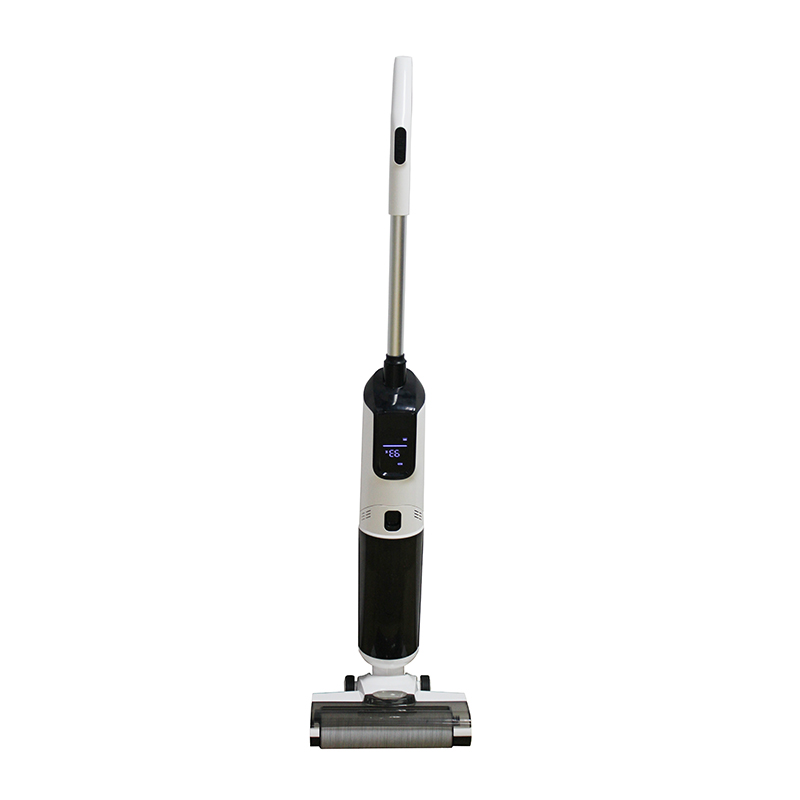
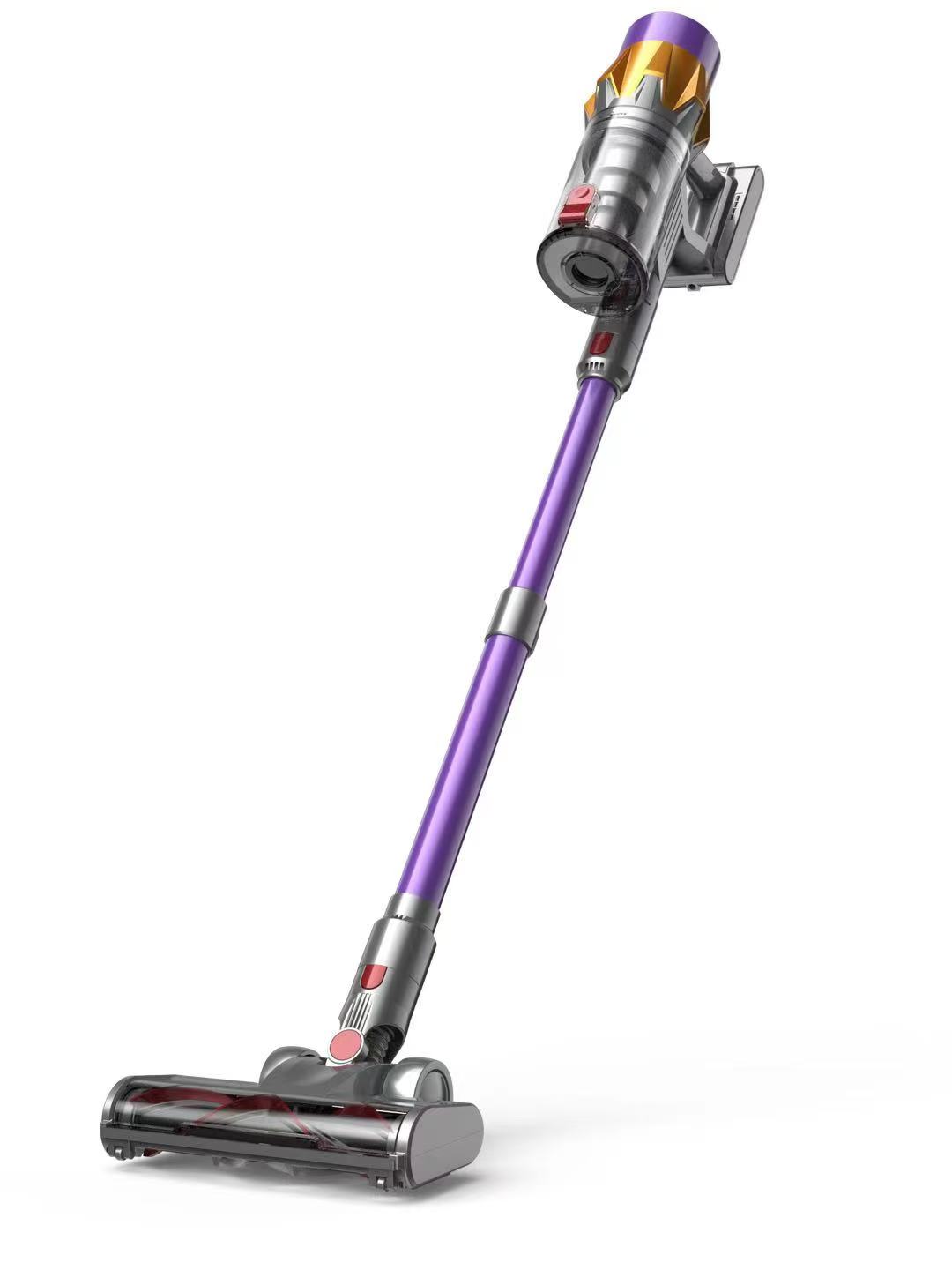
Architectural Differences: Dry vacuums prioritize high-efficiency particulate air (HEPA) filtration and motorized agitation for carpets, while wet dry units utilize bypass motors to safely isolate liquids from electrical components.
Surface Specialization: A standard dry vacuum cleaner remains the superior choice for deep-pile carpets and fine dust; wet dry vacuums dominate hard floors, workshops, and spill recovery.
Maintenance Realities: Wet dry vacuums require immediate post-use cleaning and drying to prevent mold and bacterial growth, adding significant maintenance time compared to the "store-and-forget" nature of dry vacuums.
The Hybrid Nuance: Modern upright wet/dry floor washers differ significantly from traditional canister "shop vacs," offering daily convenience for hard floors but lacking the dry suction power needed for traditional carpet care.
The Cordless Divide: Choosing between a cordless dry stick vacuum and a cordless wet dry floor washer for daily use involves trade-offs in battery runtime, machine weight, and prep-and-cleanup times.
Table of Contents
A dedicated dry vacuum cleaner relies on direct-suction motors. These motors pair with motorized brush rolls to separate and lift debris from carpet fibers. The machine forces air through tightly woven HEPA filters. This traps microscopic particles like dust mites and dander before exhausting clean air into the room. Multi-cyclonic separation or sealed dust bags maintain consistent airflow. This keeps the Cubic Feet per Minute (CFM) stable even as the collection bin fills. Electrical components sit directly in the airflow path. Introducing moisture instantly compromises the motor and ruins paper or cloth filters. The internal wiring lacks waterproofing. The bearings will rust if exposed to high humidity. You cannot bypass this design limitation. It is built strictly for dry particulate matter.
The airflow path in a standard dry unit follows a specific sequence to maximize filtration. Understanding this path explains why water is so destructive to these machines.
Air and debris enter through the floor nozzle.
The motorized brush roll agitates the carpet fibers to release embedded dirt.
The debris travels up the wand and enters the primary dirt bin or bag.
Heavy particles drop out of the airstream due to cyclonic action or bag expansion.
The remaining air passes through a pre-motor filter to protect the fan blades.
The air travels directly over and through the electric motor to cool it.
The air exits through a final post-motor HEPA filter to capture microscopic dust.
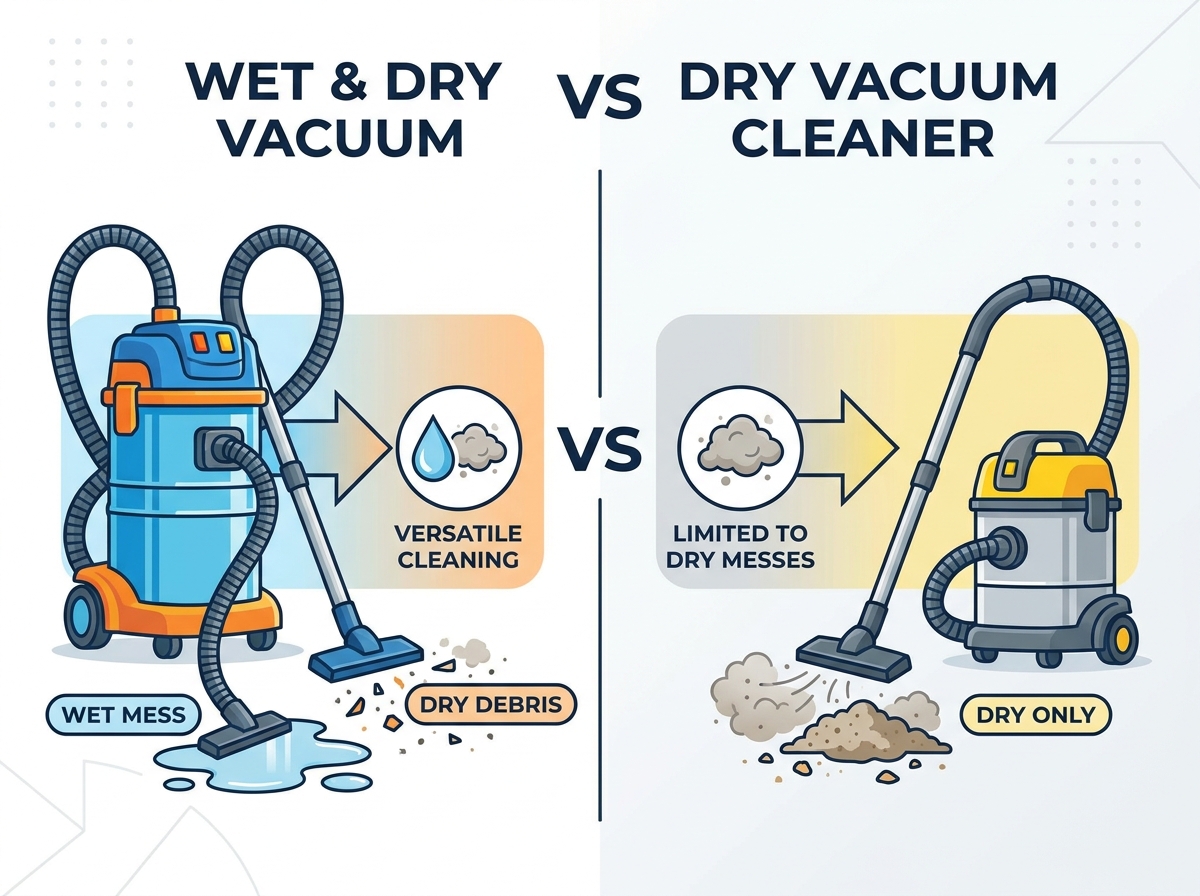
A wet dry vacuum uses bypass motor technology. This dual-chamber system strictly separates the vacuuming airflow from the motor-cooling airflow. It prevents liquid from causing electrical shorts. An internal ball float switch acts as a critical safety mechanism. It rises with liquid levels and automatically seals off the suction path when the tank is full. This prevents water from reaching the fan. These units rely on a bucket-style recovery tank for debris collection. Heavy liquids and debris drop to the bottom due to a decrease in air velocity. Air then exits through a specialized filter. You must distinguish between heavy-duty utility vacuums, modern cordless floor washers, and dedicated carpet extractors.
Bypass motors require a completely different housing design. The cooling fan pulls ambient room air over the copper coils. The suction fan pulls dirty air from the hose and exhausts it out a separate port. The two airstreams never mix. This mechanical isolation allows you to suck up standing water without electrocution risks. However, this design requires a larger motor housing. It makes the overall unit heavier and bulkier than a standard dry unit.
Feature | Direct-Suction Motor (Dry) | Bypass Motor (Wet/Dry) |
|---|---|---|
Airflow Path | Vacuum air cools the motor | Separate cooling and vacuum air |
Moisture Tolerance | Zero. Instant failure. | High. Designed for liquids. |
Weight Profile | Lighter, compact | Heavier, bulky housing |
Primary Application | Carpets, fine dust, daily home use | Spills, workshops, heavy debris |
Engineers optimize dry vacuums for high CFM. High airflow maintains constant suction through dense carpets and advanced filtration systems. You need high CFM to pull dust out of thick carpet padding. Conversely, wet dry vacuums prioritize "Water Lift" or sealed suction. High water lift pulls heavy liquids upward through the hose. This design sometimes sacrifices the broad airflow needed for sweeping large dry areas quickly. Dry vacuums maintain stable airflow longer due to efficient filtration layers. Wet dry units experience a sharp drop in suction performance as liquid levels rise. The liquid restricts internal tank volume and alters airflow dynamics.
On a jobsite, water lift determines how fast you can empty a flooded basement. CFM determines how fast you can clear sawdust off a large concrete floor. You cannot maximize both metrics in a single portable machine. Manufacturers balance the impeller design based on the intended use. A machine built for heavy water extraction will have a narrower hose and a different fan pitch. A machine built for fine dust will have a wider hose and a fan designed for volume.
Sealed systems with multi-stage HEPA filtration give dry vacuums a massive advantage. They excel at capturing 99.97% of fine particulate matter down to 0.3 microns. Standard wet dry filters are highly porous to allow moisture passage. Vacuuming fine dry dust like drywall or ash with a wet dry unit causes problems. It often results in dust blowing back into the room. You must install specialized, secondary dry-only HEPA filters to prevent this contamination. If you use a standard pleated paper filter for drywall dust, it will clog in five minutes. The motor will overheat. The exhaust will blow a cloud of white dust across the room.
Standard Paper Filters: Good for wood chips and large dirt. Fails on fine dust.
Foam Sleeves: Used strictly for liquid recovery. Offers zero dust filtration.
Cartridge HEPA Filters: Required for drywall dust and ash. Must be removed before vacuuming liquids.
Fleece Filter Bags: Excellent for containing fine dust inside a wet/dry tank. Prevents the main cartridge from clogging.
Dry vacuums win decisively on carpets and rugs. Motorized brush heads actively agitate carpet fibers to release trapped dirt. Wet dry vacuums rely solely on straight suction. They leave embedded pet hair and heavy dirt behind. You can drag a floor nozzle across a carpet all day, but without a spinning brush, the heavy grit stays at the base of the fibers. However, wet dry units excel on hard floors and spills. They easily manage mud, spilled cereal, and standing water. They perform these tasks without smearing, clogging, or damaging the internal machinery.
Cordless dry stick vacuums are lightweight and agile. Cordless wet dry vacuums carry the burden of dual water tanks for clean and dirty water. This makes multi-level transport tiring. Dry vacuums offer true "grab-and-go" convenience. Cordless wet dry vacuums require filling clean water tanks and adding specialized cleaning solutions. They also demand self-cleaning cycles post-use. Furthermore, cordless wet dry vacuums consume more power. They run water pumps and brush rollers simultaneously. This results in shorter runtimes, typically 20 to 35 minutes, compared to eco-modes on dry stick vacuums.
Unlike dry vacuums where dust goes directly into the trash, wet dry units create a messy separation process. They generate a dirty liquid-solid slurry. Disposing of thick slurry down household drains causes severe plumbing clogs. You must manually strain the mixture. Alternatively, you can dump heavy solids outdoors before pouring the liquids away safely. If you vacuum up sawdust and then vacuum up water, you create a heavy paste. This paste hardens inside the corrugated hose. It coats the inside of the recovery tank. You cannot simply dump this into a toilet.
Proper slurry disposal requires a specific workflow to protect your plumbing and your equipment.
Carry the recovery tank outside or to a utility sink with a heavy-duty trap.
Pour the contents through a mesh strainer to catch large solids.
Dispose of the strained solids in a heavy-duty trash bag.
Flush the remaining liquid down the drain with plenty of hot water.
Rinse the recovery tank with clean water to remove residual sludge.
Leaving dirty water or damp debris in a tank guarantees mold and mildew. Severe bacterial odors develop within 24 hours. The post-cleaning protocol is strict. You must empty the tank and rinse the interior. You have to wash the filter and leave the unit disassembled to air-dry. This process is required after every single wet use. If you close the lid on a damp tank, the trapped moisture creates a perfect environment for bacteria. The next time you turn the machine on, it will blast a foul odor throughout the building. You must treat a wet/dry vacuum like a mop bucket. It requires immediate attention after the job is done.
Bagged dry vacuums offer the most hygienic disposal method available. Bagless models require occasional bin washing but require zero daily drying time. Dry vacuum filters last months to years with proper care. Wet dry filters degrade much faster. Frequent saturation and drying cycles break down the filter material rapidly. Paper pleats lose their structural integrity when wet. Even washable synthetic filters eventually stretch and tear from repeated scrubbing. You will spend more time and money replacing filters on a machine used for mixed wet and dry applications.
Homes with pets and kids need quick deployment and high allergen capture. Carpet cleaning capability is essential. A high-quality dry vacuum cleaner is mandatory for these environments. You can add a supplementary cordless hard floor washer if hard surfaces dominate the home layout. You cannot rely on a shop-style machine to keep a living room clean. The lack of a motorized brush roll will leave your carpets looking flat and dirty. The exhaust will likely agitate dust rather than contain it.

Workshops demand tolerance for sharp debris like screws and wood chips. Liquid recovery and high capacity are critical success criteria. A traditional canister wet dry vacuum is the only viable choice for this rugged environment. You need a machine that can swallow a dropped bolt without shattering an internal fan blade. You need a hose wide enough to pass large wood shavings without clogging. A standard household unit will fail within minutes in a woodshop.
Commercial fleets require OSHA compliance, durability, and specific task efficiency. Janitorial teams typically require both types of machines. They use dry vacuums for office spaces and carpets. They deploy dedicated wet vacuums for floor stripping, spill recovery, and restroom maintenance. Using the right tool for the specific zone increases worker efficiency. It prevents cross-contamination between restrooms and office areas. It extends the lifespan of the equipment fleet.
Attempting to use a single machine for both garage spills and living room carpets fails. It usually results in subpar performance in both areas. Versatility always comes at the cost of specialization. You compromise deep carpet agitation for liquid handling capabilities. Dedicated tools perform their specific tasks with far greater efficiency and longevity. A machine built to do everything rarely does anything perfectly. Accept the limitations of the hardware. Buy the machine that handles your most frequent and demanding cleaning tasks.
Choosing between a wet dry vs dry vacuum cleaner depends on the type of debris you clean most often, your flooring materials, and your maintenance preferences. By comparing cleaning performance, filtration, convenience, and long-term operating costs, you can select the right vacuum cleaner that delivers better efficiency, longer service life, and the best overall cleaning results.
About SNDVAC
SNDVAC is a professional vacuum cleaner manufacturer specializing in cordless stick vacuums, upright vacuums, canister vacuums, wet & dry vacuum cleaners, and commercial cleaning solutions. With advanced manufacturing technology, comprehensive quality control, and flexible OEM/ODM services, SNDVAC provides reliable vacuum cleaners designed for residential, commercial, and industrial cleaning applications worldwide.
Choose a dry vacuum cleaner if your priority is deep carpet cleaning, fine dust removal, and superior HEPA filtration.
Choose a wet dry vacuum for workshops, garages, liquid spills, construction debris, and hard floor cleaning.
Consider filtration performance, maintenance requirements, suction power, and floor compatibility before making your purchase.
Select vacuum cleaners from manufacturers with proven engineering expertise, stable product quality, and reliable after-sales support.
Before purchasing a vacuum cleaner, evaluate your cleaning environment, debris types, flooring materials, maintenance needs, and long-term performance requirements to choose the solution that best fits your application.
A: No. These units lack the motorized brush rolls necessary to agitate carpet fibers. They rely on straight suction, which leaves embedded dirt, pet hair, and dander behind.
A: Water will bypass the standard filters and enter the direct-suction motor. This causes immediate electrical shorts, destroys the motor bearings, and ruins the internal paper filters.
A: You must clean and thoroughly air-dry the filter after every single wet use. Leaving it damp promotes rapid mold growth and degrades the filter material.
A: They are excellent for daily surface maintenance on hard floors. However, they lack the aggressive scrubbing power and heavy liquid extraction capabilities of dedicated commercial machines.
A: Only if you install a specialized fine-dust HEPA filter and a collection bag. Standard wet filters are too porous and will blow fine dust back into the air.
A: An internal float valve rises as the liquid level increases in the tank. Once the tank reaches capacity, the valve seals the suction port to protect the motor.


